

Exploring the Spectrum of Emotional Intelligence
- Dec 11, 2024
- 4 min read
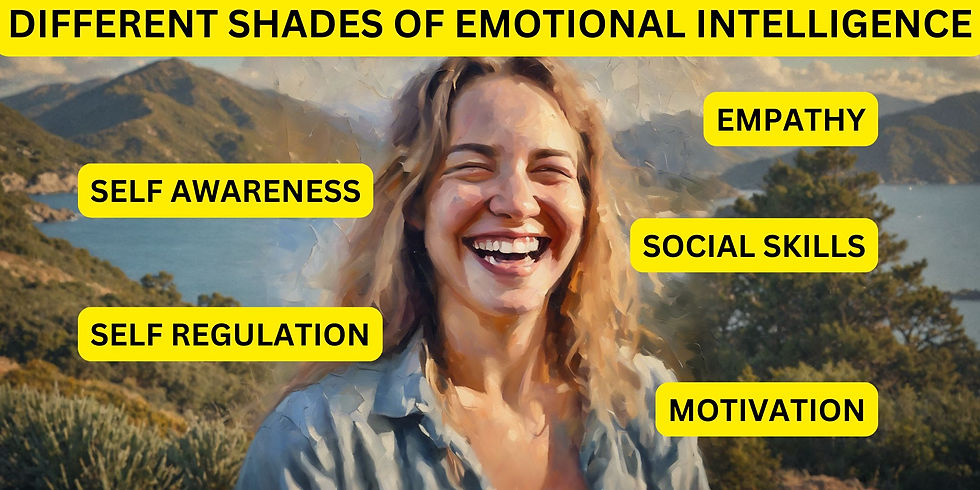
Emotional intelligence (EQ) often feels like a singular concept, a distilled skill set that helps navigate the ebb and flow of human interaction. Yet, like the spectrum of light, emotional intelligence is far from singular. It encompasses a range of competencies, each with its unique hue, shaping the way we perceive, respond to, and influence the emotional landscapes around us. To delve into these types of EQ is to journey into the rich complexities of human experience, where understanding emotions becomes an art as much as a science.
What Are the Different Shades of Emotional Intelligence?
The canvas of EQ is painted with distinct yet interconnected types. Each represents a way of engaging with emotions—be they our own or those of others. But why does it matter to identify these types? Perhaps it is because life itself is multifaceted, requiring a dynamic emotional toolkit to meet its varying demands.
Self-Awareness: The Foundation of Emotional Intelligence
At the heart of EQ lies self-awareness, the ability to recognize and understand one’s own emotions. Think of it as standing before a mirror—not just seeing your reflection but understanding the subtle shifts in expression, the underlying emotions they betray. Self-awareness calls for an unflinching honesty, a willingness to confront both light and shadow within oneself.
But this recognition is not about judgment; it is about curiosity. What does anger tell you about your boundaries? What does joy reveal about your values? Self-awareness deepens our connection to ourselves, forming the bedrock of personal growth and emotional mastery.
Self-Regulation: The Art of Emotional Balance
If self-awareness is knowing the storm within, self-regulation is learning to sail through it. This type of EQ is about managing emotions, not by suppressing them but by channeling them constructively. It is the pause before the reactive outburst, the calm amidst the chaos.
Philosopher Marcus Aurelius once mused that “You have power over your mind—not outside events. Realize this, and you will find strength.” Self-regulation embodies this wisdom, reminding us that while external circumstances may remain unpredictable, our internal responses are within our grasp.
Empathy: Walking in Another’s Shoes
Empathy is perhaps the most celebrated facet of emotional intelligence, yet it is often misunderstood. It is not merely feeling what another feels but understanding the depth and nuance of their experience. Empathy asks us to quiet our assumptions, to listen not just with ears but with our entire being.
Imagine a world where every conflict was met with genuine curiosity instead of defensiveness, where understanding preceded judgment. Empathy bridges divides, creating spaces for connection and compassion in a world often fractured by indifference.
Social Skills: The Language of Connection
While empathy opens the door to understanding others, social skills guide us in how to interact with them. This aspect of EQ encompasses communication, conflict resolution, and collaboration—the tools that build and sustain relationships.
Strong social skills are not about charisma or persuasion alone; they are about authenticity. They require an alignment between what is felt, thought, and expressed—a harmony that resonates with others on a profound level.
Motivation: The Drive Beyond Emotion
Motivation, in the context of EQ, transcends external rewards or recognition. It is an intrinsic force, fueled by passion, purpose, and the desire for growth. Those with high emotional motivation are not deterred by setbacks; they view challenges as opportunities to refine their craft and deepen their resolve.
How often do we ask ourselves what truly drives us? And how often do we pursue those answers with the same vigor as we chase fleeting goals? Motivation rooted in emotional intelligence inspires a life not of mere achievement but of meaningful progress.
The Interplay of Emotional Intelligence Types
These types of EQ are not isolated silos; they interact, overlap, and reinforce one another. Self-awareness feeds self-regulation, which in turn enhances empathy. Social skills thrive on the foundation of empathy, and motivation sustains the effort required to cultivate all these skills.
In exploring this spectrum, one might wonder: Which type of EQ resonates most with my life’s challenges? And where do I feel the need to grow? These questions are not about self-criticism but about self-discovery, about embarking on a journey toward emotional wholeness.
Why Understanding EQ Types Matters
In a world that often prioritizes technical expertise or intellectual prowess, the nuanced art of emotional intelligence is undervalued. Yet, it is this art that shapes the essence of human interaction, grounding us in authenticity and connection.
By understanding the different types of EQ, we gain not only a framework for personal growth but also a lens through which to view others with greater compassion. Each type offers a way to navigate the complexities of life with grace, resilience, and humanity.
As you reflect on the spectrum of emotional intelligence, consider the ways it manifests in your daily life. How do you respond to your own emotions? How deeply do you understand those of others? And how might you nurture these facets of EQ to create a life rich in meaning and connection?
In embracing these questions, you begin to unlock the transformative potential of emotional intelligence—a power that, while invisible, leaves an indelible mark on every life it touches.
Compiled by Sriram in collaboration with Stanly Sunny
If you're ready to unlock your full potential and take control of both your career and mental well-being, our coaching sessions are designed to guide you through this transformative journey. Whether you're facing challenges, seeking balance, or striving for success, personalized coaching can provide the tools and insights you need. Visit our website to learn more and book a session with one of our experienced coaches who will help you achieve your goals while prioritizing your mental health. Start your path to a more fulfilling and successful career today!


Comments